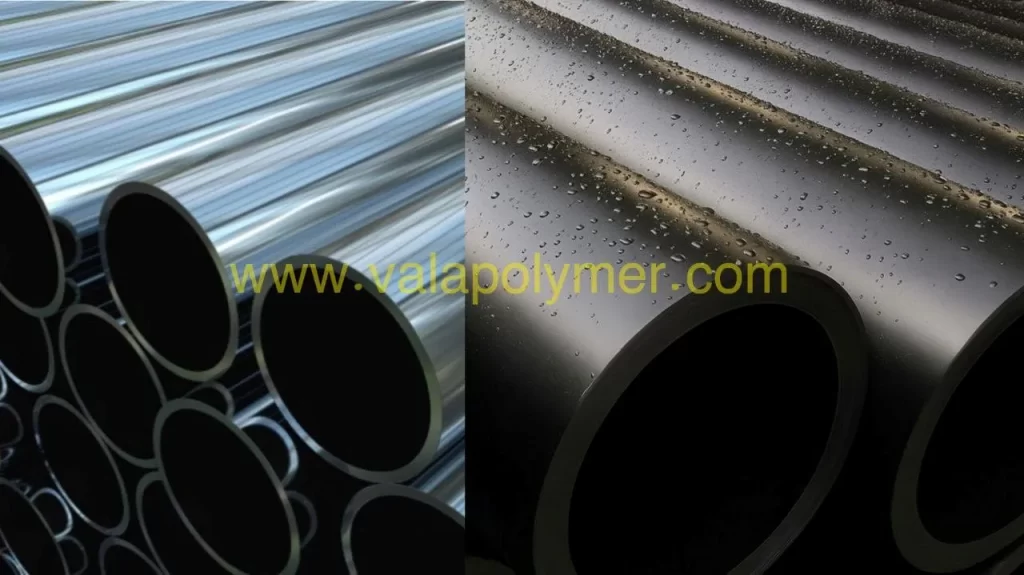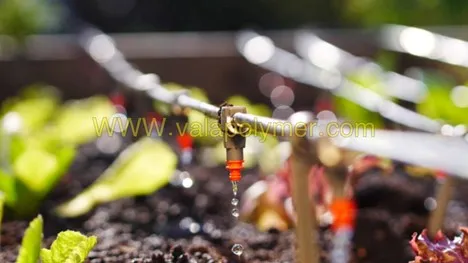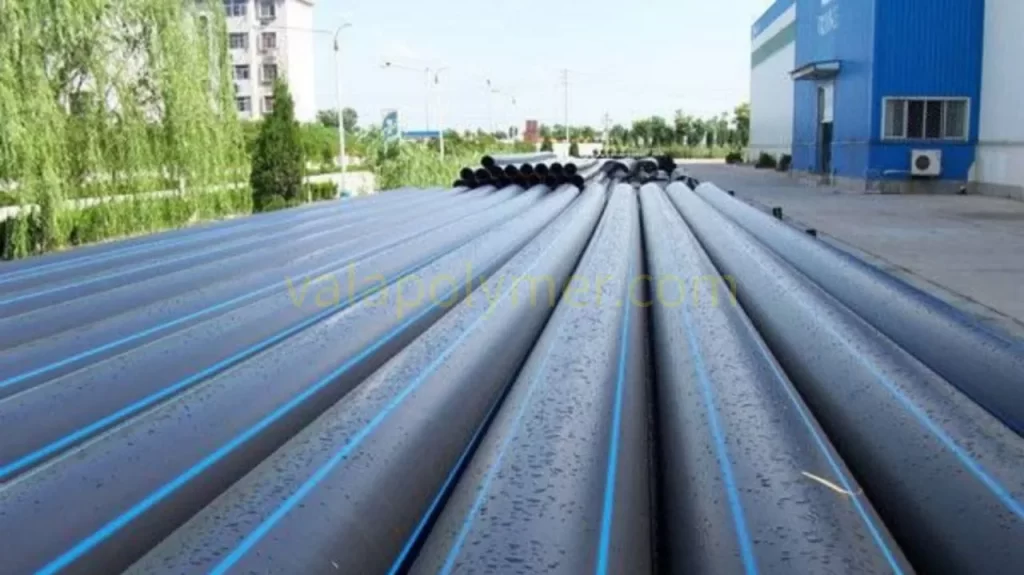


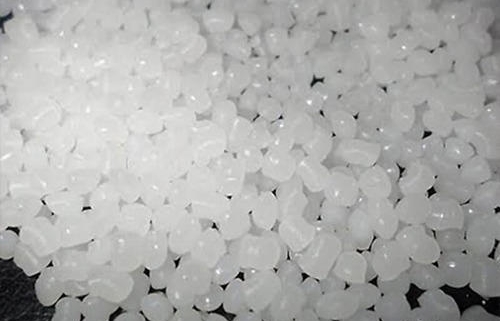
When employers and contractors are looking to select a strong, reliable, and cost-effective pipe for their projects, polyethylene is their first choice. Single-wall polyethylene pipes are a cost-effective solution for a wide range of piping applications, including natural gas distribution, municipal water and wastewater, industrial applications, marine installations, mining, landfills, and electrical and telecommunications conduits. To learn more about single-wall pipes, follow the article on the characteristics of single-wall polyethylene pipes.
Additionally, these pipes are efficient for aerial, underground, surface, floating, and marine installations. According to Mr. Will Abbey of P.O.E. Company, one of the main reasons for the increased use of plastic pipes is the savings in installation costs, labor, and required equipment compared to conventional old pipes. If you add the potential for lower maintenance costs and longer service life to these factors, you will understand the reason for the intense competition of polyethylene pipes in global markets.
Using polyethylene pipes in natural gas distribution is one of the earliest applications of medium-density polyethylene (MDPE) pipes. Today, 95% of natural gas transmission pipes under 12 inches installed in the United States and Canada are made of polyethylene. Polyethylene is considered the primary choice for industrial pipe material worldwide.
After 50 years of continuous use in potable water transmission, polyethylene pipes continue to receive international certifications and see growing use in municipal applications. Polyethylene pipes are quality-controlled according to NSF, AWWA, and ASTM standards.
Now, we will explain what makes pipes made from polyethylene unique.
- Life cycle High: The municipal use of polyethylene pipes has very low life cycle costs. The perfectly smooth inner surface of polyethylene pipes helps maintain special flow properties, and thermal fusion welding eliminates leaks. This has proven to be a successful combination for reducing system operating costs.
- Leak-Free and Fully Restrained Joints: Connecting polyethylene using heat fusion creates leak-free joints with strength equal to or even greater than the pipe itself. Using fusion welding in municipal applications eliminates potential leak points that exist in other pipe types, such as PVC or iron pipes, due to the use of male-female connections every 10 to 20 feet. All these male-female connections use rubber gaskets that deteriorate over time and become prone to leaking. This is why the “acceptable water leakage rate” for them is 10% or more, whereas for polyethylene pipes, due to the possibility of using welding, this rate is relatively zero. Additionally, welded polyethylene joints have a self-restraining property that maintains joint integrity while eliminating the need for expensive thrust restraints or thrust blocks. Despite the advantages of butt fusion joining, engineers also use other methods to connect polyethylene pipes, including electrofusion and mechanical joints.
In electrofusion joints, the pipes and/or fittings are connected to each other using an embedded electric heater.
Sometimes, mechanical joints are required to connect pipes to other components such as valves or other installed devices. For such purposes, special fittings have been developed that are widely available to meet most application needs.
- Corrosion and Chemical Resistance: Polyethylene pipes are immune to rusting, rotting, and pitting. They also do not promote the growth of living organisms inside or outside the pipe. Polyethylene pipes have exceptional chemical resistance. Although polyethylene pipes are not affected by chemically active natural soil, like any other pipe, if the soil is contaminated with organic solvents (such as petrol or diesel), installation methods that protect the polyethylene pipe from contact with the organic solvent may be necessary. Of course, protection against permeation by dissolution is also necessary for metal pipes and other types of pipes that are connected using gaskets. Generally, for all piping systems installed in contaminated soil, it is essential to use protective measures during installation that guarantee the quality of the fluid being transported.
- Flexibility and Fatigue Resistance: Polyethylene pipes can be bent on-site to a radius of up to approximately 30 times their diameter
, depending on the pipe wall thickness, this value can be lower. For example, a 12-inch polyethylene pipe can be cold-formed on-site to a radius of 32 feet. This eliminates the need for many fittings
that are used for directional changes in the piping system and also facilitates installation. Polyethylene has exceptional fatigue resistance and, under the highest operating pressure, can withstand multiple pressure surges of up to 100% above its maximum working pressure without any negative impact on its long-term performance capabilities.
- Seismic Resistance: The toughness and flexibility of polyethylene pipes, along with their other special properties—including leak-free and fully restrained joints achieved through welding—make them entirely suitable for installation in active soil environments and earthquake-prone areas.
- Structural Advantages: Properties such as low weight, flexibility, and fully insulated, leak-free joints collectively provide cost-effective and unique installation methods that are not possible with other materials. In many installations, techniques such as horizontal directional drilling, pipe rehabilitation using pipe bursting, sliplining, and installing pipes semi-submerged or floating can significantly facilitate construction and lead to considerable savings in time and cost. Installing polyethylene piping systems, which weigh about one-eighth as much as equivalent-sized steel pipes and use integrated, leak-free joints compatible with various working conditions, is simpler and does not require heavy lifting equipment. Polyethylene pipes are manufactured in standard lengths of 50 feet or more and are coiled into large reels for diameters of 6 inches and above. For certain specific diameters, reels longer than 1000 meters are available. Polyethylene pipes withstand impact, especially in cold weather conditions where other pipes may crack or break, far better than PVC pipes.
Since butt-welded polyethylene joints are as strong as the pipe itself, they can be joined together in very long sections above ground and then placed directly into the trench, pulled through a bore path using directional drilling, or used in pipe rehabilitation processes (such as sliplining). It is important to note that site conditions significantly influence the choice of installation method.
- Durability: Polyethylene pipe installations are cost-effective due to the physical properties of the pipe, leak-free joints, and reduced maintenance costs, making them less expensive in the long run. The polyethylene pipe industry estimates the useful life of these pipes to be between 50 and 100 years on average, provided the piping system is properly designed and installed, and used according to published industry standards and the pipe manufacturer’s recommendations. This longevity and extended service life result in a form of savings on pipe replacement costs. In properly designed and installed polyethylene pipe systems, there is minimal need for ongoing maintenance. Polyethylene pipe is resistant to most common chemicals and is not susceptible to galvanic corrosion or electrolysis.
- Hydraulic Efficiency: Since the inner surface of polyethylene pipes is free of any roughness, these pipes fall into the category of smooth pipes, a group that offers the least resistance to fluid flow.
- Temperature Resistance: The common operating temperature range for polyethylene pipes under high-pressure working conditions is 0 to 140 degrees Fahrenheit. However, for low-pressure working conditions and some specific applications, this material can withstand much lower temperatures.
Many of the polyethylene resins used in polyethylene pipes have undergone stress testing not only at the standard temperature of 73 degrees Fahrenheit but also at higher temperatures such as 140 degrees Fahrenheit. Generally, polyethylene pipes retain more of their strength at high temperatures compared to other thermoplastic materials like PVC. Polyethylene materials retain approximately 50% of their strength at 73 degrees Fahrenheit when at 140 degrees Fahrenheit, whereas PVC loses nearly 80% of its strength at 73 degrees Fahrenheit when at 140 degrees Fahrenheit. Consequently, polyethylene pipes can be used in many piping applications across a wide range of temperature variations.
- Toughness: Toughness is defined as a material’s ability to deform under stress without fracturing or ultimately failing. It is also sometimes interpreted as the ability to undergo high strain (elongation), and this is one of the important characteristics of polyethylene pipes, both when used aboveground and underground. For example, when a load is applied from the ground surface, a buried polyethylene pipe deforms, and its circular cross-section changes to an elliptical shape, where its vertical diameter decreases and its horizontal diameter slightly increases. The increase in horizontal diameter causes the soil walls to press against the pipe’s width; this pressure prevents further deformation of the pipe and ultimately leads to its stability. This phenomenon ultimately creates a soil-pipe composite structure, giving tough materials the ability to withstand vertical ground loads or other vertical loads. These loads could cause failure in pipes that are stronger but have lower strain capacity. Tough materials like polyethylene, used in water, natural gas, and industrial piping, can safely tolerate increased localized stresses resulting from improper installation—where rocks, stones, or tree stumps may be positioned to press against the pipe’s external surface. There are many other civil engineering conditions that may lead to effects similar to those mentioned above; for example, bending the pipe beyond the allowable strain, insufficient pipe reinforcement, unsuccessful alignment of the pipe for connection to rigid structures, etc.
Read more: Characteristics of Gas Distribution Polyethylene Pipe
The ability to create more localized deformation without causing irreversible damage, such as cracking, exists. In fact, localized deformation leads to the significant distribution and dissipation of local stress without harmful effects on the pipe. Consequently, the structural design of materials that behave in a ductile manner can generally be based on average stress, and this fact greatly simplifies the design protocol.
- Viscoelastic Property: Polyethylene pipe is a material with a viscoelastic structure. Due to its molecular nature, polyethylene has a complex combination of fluid-like and elastic-like behavior. As a result, this material exhibits properties intermediate between metallic crystals and highly viscous (slow-flowing) fluids.
The viscoelastic nature of polyethylene leads to two engineered properties that are used in the design of polyethylene water piping systems:
Creep and stress relaxation.
- Creep: A component of deformation defined as the time-dependent viscous flow component. Creep is also interpreted as polyethylene’s response to a constant load over time. When polyethylene is subjected to a constant load, it immediately undergoes an instantaneous deformation predictable by the elastic modulus from the tensile stress-strain curve. In addition to this instantaneous deformation, under high loads, the material continues to deform at a decelerating rate, and if the load is sufficiently high, the material may experience buckling or failure.
- Stress Relaxation: Another unique feature resulting from the viscoelastic nature of polyethylene. When polyethylene is subjected to a constant strain, maintaining a specific amount of deformation for a period, the load or stress generated due to the deformation gradually decreases over time, though it is never completely eliminated. This stress relaxation in response to load is of great importance in the design of polyethylene pipe systems. It is the response that leads to a reduction in stress in sections of the pipe that are under constant strain.
Polyethylene, a material with high-performance characteristics.
One of the most important properties of polyethylene is its non-conductivity to electric current, which enables it to function well in various conditions. These pipes are safe against electrochemical corrosion processes caused by electrolytes such as salts, acids, and bases. Additionally, polyethylene pipes are not vulnerable to microbial attacks, and their smooth, non-stick inner surface has a low friction factor.
Another advantage of polyethylene pipes that makes them unique in terms of performance is their high flexibility. This characteristic facilitates the installation process because it allows for directional changes with minimal fittings. Flexibility also enables long pipes with diameters up to 6 inches to be coiled. Another unique performance property of polyethylene pipes is their strainability, which indicates the ability to undergo significant deformation without failure. A buried polyethylene pipe can safely deflect in response to a load applied from the ground surface and use the surrounding soil as support. This means that if a polyethylene pipe is installed correctly, it can withstand soil pressure and surface live loads, whereas the same load could cause failure in pipes that are much stiffer but crack and rupture under small deformations. Practical tests have also proven that the high strainability of polyethylene pipes makes them highly resistant to vibration.
By using heat fusion processes, polyethylene pipes and fittings can be made leak-proof and fully insulated, with strength equal to the pipe itself. The combination of these advantages makes polyethylene pipes preferable for specific applications, including horizontal directional drilling, pipe bursting, and sea outfalls.
Polyethylene pipes retain their toughness even at low temperatures.
Furthermore, polyethylene pipes have very high fatigue resistance and are highly resistant to various and repeatedly applied forces.
Despite the mentioned advantages and other benefits of polyethylene pipes, their proper design and application require a sufficient understanding of their more complex stress-strain and stress-fracture behaviors. Polyethylene pipes do not operate based on the simple proportionality between stress and strain described by Hooke’s law, which is characteristic of metal pipes; rather, their resistance to failure decreases with increased load duration. In addition to these characteristics and other mechanical properties, they are more sensitive to temperature and certain specific environments. Moreover, the mechanical responses of a polyethylene pipe can vary depending on the raw polyethylene material from which the pipe is made. This depends largely on the nature of the polyethylene polymer, namely its molecular weight, molecular weight distribution, degree of branching, density, and also to some extent on the type and amount of additives used in the pipe composition. The behavior of a specific polyethylene pipe selected for a particular application must be compatible with its design and intended performance.