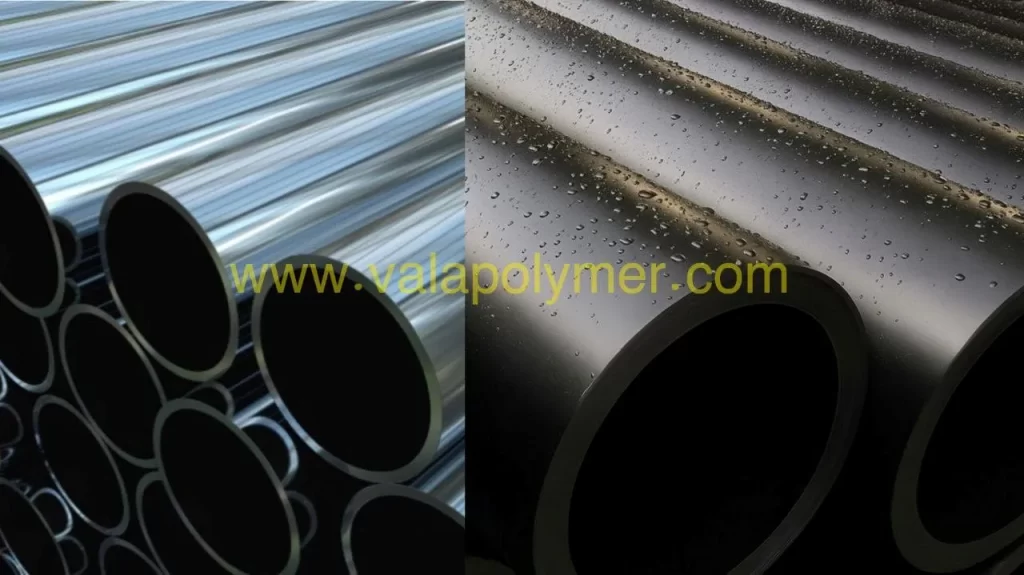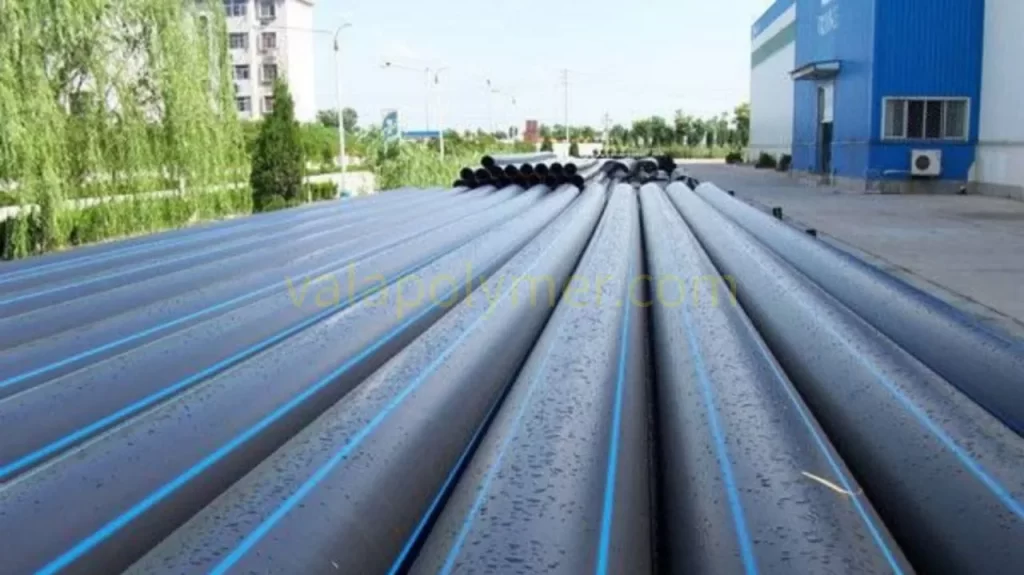


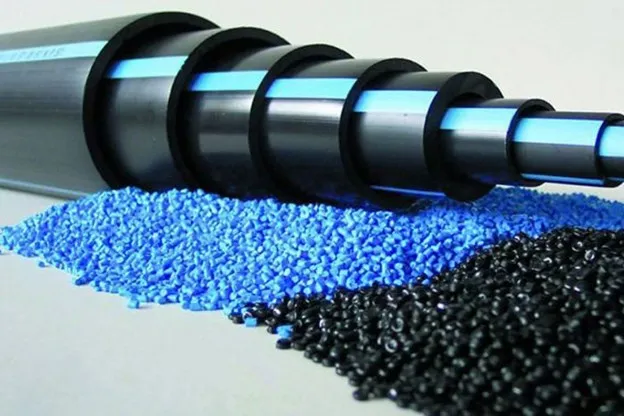
, is a type of plastic pipe made from a material called polyethylene. Polyethylene is a thermoplastic polymer that is used in various industries due to its very good mechanical, chemical and physical properties. Polyethylene pipes are suitable for transmitting significant pressure in water, gas, oil, sewage, etc. due to their high resistance to corrosion, impact, corrosion, pressure, heat and UV radiation.
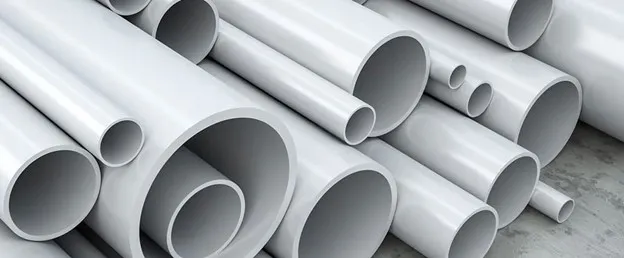
Polyethylene pipes are also very good for use in water supply and sewage networks in mountainous areas, because they still prevent breakage under high water pressure.
Application of polyethylene pipe
Polyethylene pipes are used in various industries as an alternative to traditional pipes due to their exceptional properties. Some of the applications of these pipes include:
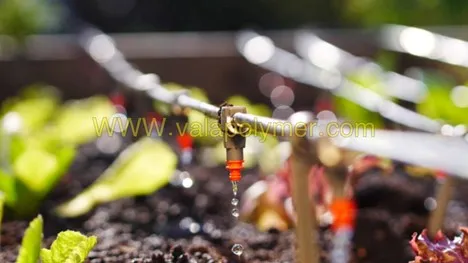
- Water transportation: Polyethylene pipes are used to transport water in irrigation systems, water supply networks, fish ponds and industrial facilities.
- Gas transportation: These pipes are used to transport natural gas, city gas, firefighting gases and industrial gases.
- Oil and gas transportation: Polyethylene pipes are used to transport oil and gas in the oil and gas industries.
- Sewage: These pipes are used to transport sewage in cities and villages.
- Industry: Polyethylene pipes are used in various industries including the chemical, pharmaceutical, agricultural and automotive industries.
- Building: Polyethylene pipes are used in building heating and cooling systems, fire systems, and for transporting water and sewage in buildings.
Further reading: Factors affecting the lifespan and
Given the unique properties of polyethylene and the advantages that these pipes have compared to traditional pipes, it can be said that their use has received significant attention in various industries, especially in pressure transmission systems.
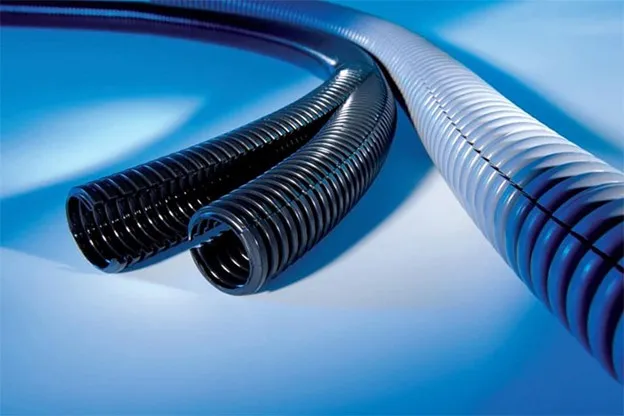
What are the types of polyethylene pipes?
Polyethylene pipes are one of the types of polymer vessels and are usually used to transport fuel, gas, water, sewage, irrigation, etc. Based on the application and type of use, there are different types of polyethylene pipes, which are briefly listed below:
- High-density polyethylene (HDPE) pipe: This type of pipe is produced with high density and good hardness and is usually used to transport drinking water, sewage, natural gas, and industrial wastewater.
- Medium Density Polyethylene (MDPE) Pipe: This type of pipe is made from polyethylene, similar to lower density polyethylene gas pipe, and is commonly used to transport gas and water.
- Low-density polyethylene (LDPE) pipe: This type of pipe is manufactured with a lower density than HDPE and is typically used to transport water and low-hazard chemicals.
- Polyethylene pipe (PEX): This type of pipe is used for heating and cooling systems and has high resistance to heat and pressure.
- Polybutylene polyethylene (PB) pipe: This type of pipe is used to transport gas and water and has high resistance to flame and erosion.
Depending on the type and application of the pipe, there are different sizes and dimensions for each type.
What are the disadvantages of polyethylene pipes?
Using polyethylene pipes has many advantages over other plumbing materials, but along with these advantages, there are also some disadvantages that we should also pay attention to. Below are some of the disadvantages of polyethylene pipes:
- Pressure drop: This type of pipe is weaker against water pressure than metal pipes such as copper and steel pipes. Therefore, to transport water at high pressure and over long distances, you need polyethylene pipes with a larger diameter or install a pump.
- Unsuitable for some substances: Polyethylene pipes are not suitable for transporting certain chemicals, such as benzene and toluene. In these cases, more suitable pipes, such as PVC pipes, should be used.
- Heat sensitivity: Polyethylene pipes are very sensitive to temperature and lose their quality at very high or low temperatures and may fail or deform.
- Vulnerability to sunlight: Polyethylene pipes are sensitive to sunlight and if exposed to it, cracks and weakness will occur in the pipes.
- Leakage: Polyethylene pipes are at risk of leaking if they are hit by sharp objects and the inner surface of the pipe is damaged. Therefore, if you need to install this type of pipe, you should use appropriate and professional tools.
Raw materials for polyethylene pipes
The raw materials used in the production of polyethylene pipes include high-density polyethylene (HDPE), medium-density polyethylene (MDPE) and low-density polyethylene (LDPE). The raw materials of polyethylene pipes are produced from crude oil. In the process of producing polyethylene pipes, first the polymer raw materials are added together with additives such as antioxidants, antistatics and antifoams and then they are formed into pipes at high temperature and high pressure, under a process called extrusion. Finally, the produced pipes are packaged according to the type of use and sent to the users if needed.
Lifespan of polyethylene pipes
The lifespan of polyethylene pipes depends on various characteristics, including the type of polyethylene, the conditions of use and maintenance, and their application. However, under appropriate conditions, polyethylene pipes can operate for up to 50 years or more. To obtain the exact lifespan of polyethylene pipes, the following points should be considered:
Further reading: Application of polyethylene pipes in urban, interurban and industrial wastewater transportation
- Pipe storage and use conditions: To maintain the life of polyethylene pipes, proper storage and use conditions must be ensured. For example, strong chemicals, direct sunlight, and high temperatures must be avoided.
- Environmental conditions: Environmental conditions such as temperature, humidity, salinity, and acidity also affect the life of polyethylene pipes. For use in special conditions such as marine environments, polyethylene pipes with higher resistance to salinity and acidity should be used.
- Installation method: The installation method of polyethylene pipes also affects their lifespan. To maintain the lifespan of the pipes, skilled and expert installers should be used and the use of tools that may damage the pipes should be avoided.
Therefore, to determine the exact lifespan of polyethylene pipes, the above points must be considered and an accurate estimate of their lifespan must be provided, considering environmental conditions and usage.
What are the factors affecting the price of polyethylene pipes?
The price of polyethylene pipes is affected by various factors. Below are some of these factors:
- Type of polyethylene: The price of polyethylene pipes depends on the type of polyethylene used. Higher quality polyethylene with better properties against corrosion, impact, heat, shock, chemicals, etc., costs more.
- Pipe dimensions: The diameter and thickness of the pipe directly affect its price. Larger and thicker pipes cost more.
- Application: The type of application of the pipe also affects its price. For applications that require special properties such as resistance to corrosion, chemicals, impact, heat, etc., the price of the pipe is higher.
- Market conditions: Market conditions and current demand affect the price of pipes. In competitive market conditions, pipe prices decrease, and conversely, in high demand market conditions, pipe prices increase.
- Production conditions: The production conditions of the pipe also affect its price. If the production conditions are difficult, the price of the pipes will increase.
Therefore, the price of polyethylene pipes depends on several factors. Ultimately, all of these factors must be considered to choose the best pipe for the given conditions.
Further reading: What is the lifespan of a drip irrigation polyethylene pipe?
What are the different grades of polyethylene pipe raw materials?
Grades of polyethylene pipe raw materials are divided into several categories based on their physical and chemical properties. Some common grades of polyethylene pipe raw materials include:
- LDPE (Low-Density Polyethylene): This grade is used to produce flexible pipes due to its low density, high flexibility, and resistance to breakage and tearing.
- LLDPE (Linear Low-Density Polyethylene): This grade is used to produce industrial and electrical pipes due to its low density, resistance to gas and liquid leakage, high flexibility, and high resistance to corrosion.
- HDPE (High-Density Polyethylene): This grade is used to produce significant pressure, industrial, and water supply pipes due to its high resistance to pressure, corrosion, and abrasion.
- MDPE (Medium-Density Polyethylene): This grade is used to produce pipes with significant pressure and impact resistance due to its special combination of HDPE and LDPE properties.
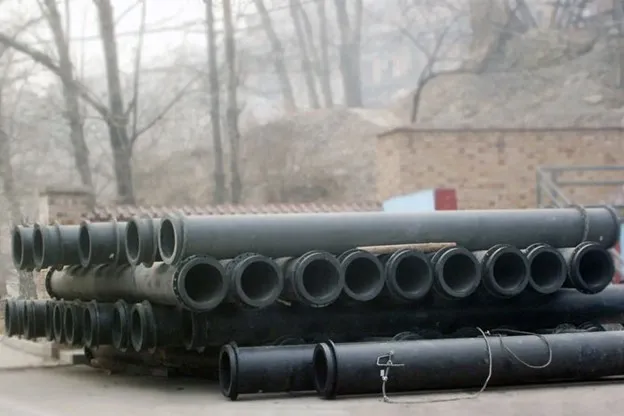
Each grade of polyethylene pipe raw material has specific characteristics, and depending on the needs, the appropriate grade is selected for the production of polyethylene pipes.
What are the different grades of HDPE (high density polyethylene)?
There are several different types of HDPE (high density polyethylene) grades, each with their own properties and applications. Some of the most common HDPE grades include:
- PE63: This is a low density grade of HDPE commonly used for irrigation and agricultural applications. Its production is now obsolete and no longer produced in petrochemicals producing extruded heavy-duty polyethylene.
- PE 80: This is a medium density grade of HDPE used for gas and water supply pipelines.
- PE 100: This is a high-density grade of HDPE that is commonly used for gas and water supply pipelines as well as for sewage and drainage systems. Currently, most petrochemical plants in Iran and around the world have put this type of grade on their production agenda.
- PE-RT: This is a high temperature resistant grade of HDPE used for hot water and heating applications.
- UV Stabilized HDPE: This is a grade of HDPE that has been stabilized against UV rays and is commonly used for exterior applications such as pipes and fittings for irrigation and water supply systems.
Each of these HDPE grades has its own unique properties and characteristics that make it suitable for specific applications. Selecting the right HDPE grade depends on the specific application requirements such as expected temperature, pressure, chemical resistance and environmental factors.