

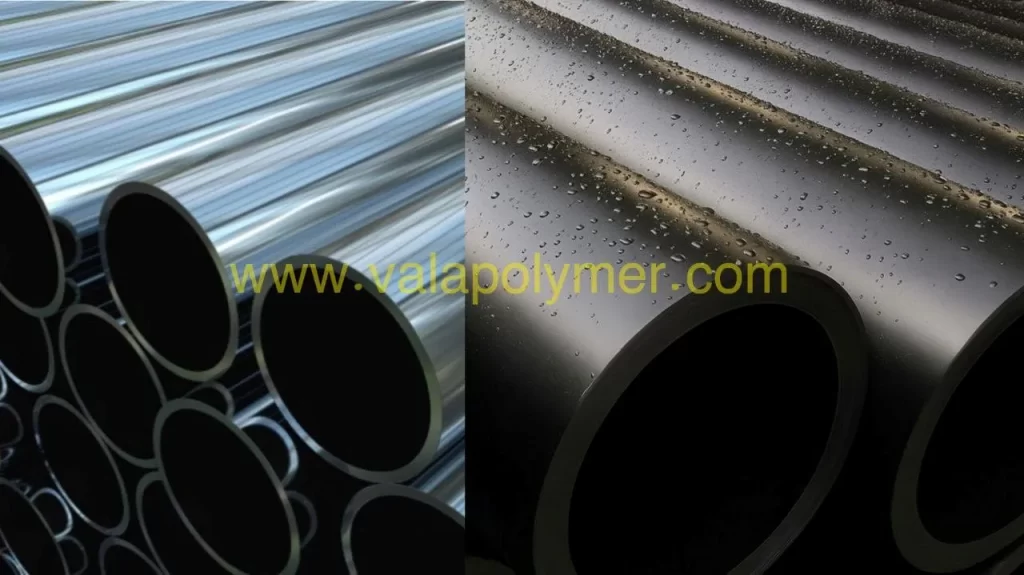
From the past to the present, the choice between polyethylene pipes and metal pipes has been an important issue in the water supply, gas supply, sewage and even chemical industries. While metal pipes were the first choice of engineers for many years, the advancement of polymer technologies has allowed polyethylene pipes to find a special place in industrial projects. One of the most important decision-making criteria in this field is chemical resistance.
1. Rust resistance
- Polyethylene pipe:
It is inherently resistant to rust. Even in humid, acidic, alkaline and salt water environments, no destructive reaction occurs. This feature has allowed polyethylene pipe to perform long-term in drinking water and agricultural water lines without the need for additional coatings. - Metal pipes:
Metal quickly oxidizes and rusts when exposed to water and oxygen. Methods such as galvanizing or epoxy coating are commonly used to reduce this problem, but these coatings also become vulnerable after a while.
2. Corrosion resistance
- Polyethylene Pipe:
The new generation of polyethylene pipes PE100 and PE100-RC have excellent resistance to corrosion caused by chemicals such as chlorides, sulfates and industrial wastewater. This feature has led to their widespread use in the petrochemical and refinery industries. - Metal Pipe: Even stainless steel is vulnerable to some acidic and chloride environments. Carbon steel pipes also corrode quickly and require periodic maintenance and replacement.
3. The impact of chemicals
- Polyethylene pipe:
Resistant to most industrial chemicals including acids, alkalis, oxidants and salts. This makes it an ideal choice for transporting corrosive chemicals. - Metal pipe:
Sensitive to many chemicals. For example, sulfuric acid or chlorides can cause severe corrosion. Therefore, choosing the right alloy and using expensive coatings is essential.
4. Resistance to electrolysis and electric current
- Polyethylene pipe: Due to its high electrical resistance, it does not suffer from electrolytic corrosion. In urban areas where there are electrical cables and metal infrastructure, the use of polyethylene pipe reduces the risk of galvanic corrosion to zero.
- Metal Pipe: One of the biggest weaknesses is galvanic corrosion. Contact between two dissimilar metals or electrical currents can quickly destroy metal pipes.
5. Compatibility with the food industry
- Polyethylene pipe:
It is safe from a health perspective and has international approvals for use in the food industry and for transporting drinking water. For this reason, many dairy, beverage, and mineral water factories use polyethylene pipe. - Metal pipe:
Metals in contact with food may cause unwanted reactions and even harmful compounds can enter the water or food stream. To prevent this problem, special and expensive coatings must be used.
6. Advantages of polyethylene pipe over metal pipe
- High chemical resistance to most industrial materials
- No need for anti-rust or anti-corrosion coating
- Light weight and easy to transport
- High flexibility and faster installation
- Longer lifespan (at least 50 years under standard conditions)
- Much lower maintenance cost
7. Disadvantages of polyethylene pipes
- Sensitivity to very high temperatures (above 60 to 70 degrees Celsius for a long time)
- Limited ability to withstand very high pressures compared to some thick steel pipes
- Possibility of vulnerability to severe mechanical shock at very low temperatures
8. Why is the Vala Polymer brand a leader in the polyethylene pipe industry?
Vala Polymer Company is one of the most reputable polyethylene pipe manufacturers in Iran, which, by utilizing high-quality raw materials and modern production lines, offers products that meet global standards. The features of Vala Polymer products include:
- Production of polyethylene pipes with different grades (PE80, PE100, PE100-RC)
- High chemical and mechanical resistance
- Compliance with national and international standards
- Providing engineering consulting services to select the right pipe for each project
For this reason, the Vala Polymer brand is the first choice of engineers for many water supply, agricultural, petrochemical, and food industry projects.
Questions and Answers
1. Is polyethylene pipe completely resistant to acids?
Yes, polyethylene pipe is highly resistant to most mineral and organic acids. It may only be limited to some very strong oxidizers at high temperatures.
2. What is the useful life of polyethylene pipe?
If installed correctly and under standard conditions, the useful life of polyethylene pipe is estimated to be more than 50 years.
3. Is polyethylene pipe a complete replacement for metal pipe?
In many applications, yes; but in projects with very high temperatures and pressures, metal pipe is still used.
4. What is the difference between regular polyethylene pipe and PE100-RC?
PE100-RC is a new generation of polyethylene pipe that has much greater resistance to cracking and chemicals and is designed for harsh industrial conditions.
5. Why should we buy from the Vala Polymer brand?
Because Vala Polymer products, in addition to high quality and chemical resistance, have reliable standards and provide strong engineering support for various projects.
Conclusion:
In comparing metal pipe and polyethylene pipe, it can be clearly seen that polyethylene pipe has a significant advantage in the field of chemical resistance, anti-corrosion, compatibility with the food industry and ease of installation. Choosing a reputable brand like Vala Polymer also ensures that in addition to the quality of raw materials, technical support and necessary standards are met in your projects.