

Health and safety in polyethylene pipes and their properties
Today, raw materials, fittings, and polyethylene pipes used in drinking water pipelines are tested according to standards provided by the National Institute of Health.
The most recent standard written by NSF is Standard 61, entitled Health Effects of Components of Drinking Water Systems.
This standard provides the fourth set of toxicological standards not only for polyethylene pipe, but also for all components of drinking water systems. Compliance with these standards is required in most states or authorities that have jurisdiction over water quality.
Read more: Use of polyethylene pipes in sewage transport
There are other certification programs, conducted both by independent laboratories and industry organizations, and by government agencies.
These programs are designed to ensure compliance with product usage standards.
These programs include manufacturer certification, product testing, on-site inspections of factories, and the use of product labels to indicate compliance with standards. Products that fail to comply are removed from the list or recalled from the market.
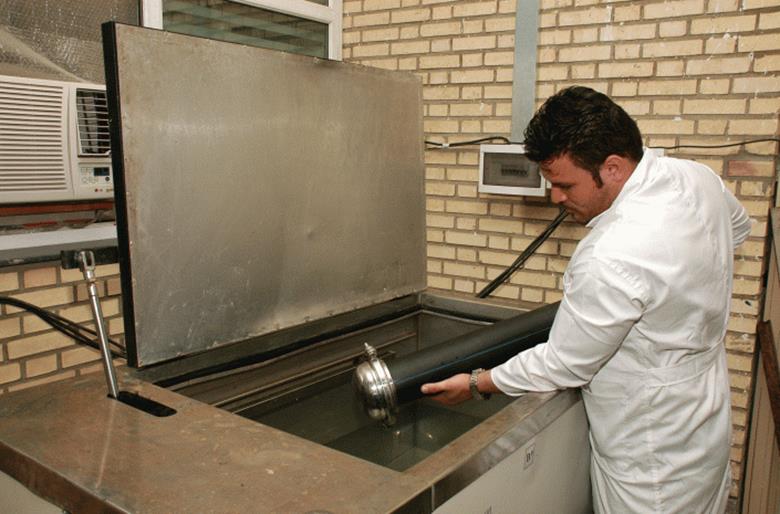
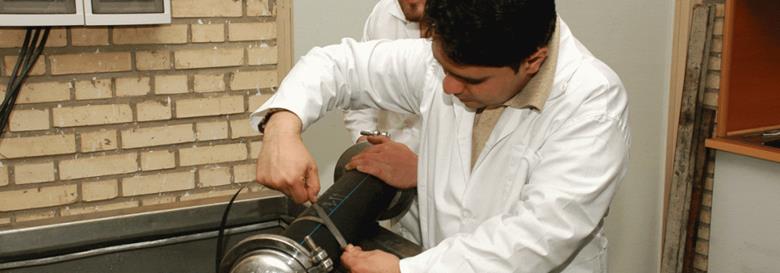
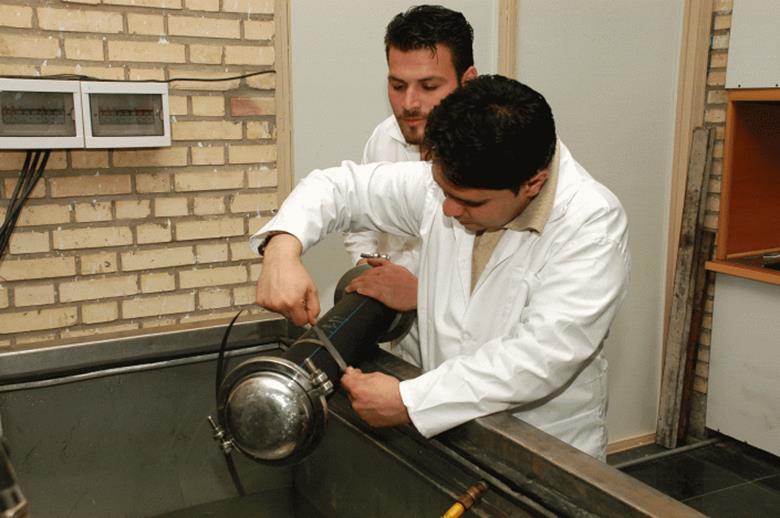
Vala Polymer Company is equipped with specialized laboratories for polyethylene pipes, where the produced pipes are tested.
Flammability
Polyethylene begins to burn after continuous contact with flame, unless it contains flame retardant stabilizers.
The flash point and auto-ignition temperature of polyethylene pipe are 645°F (341°C) and 660°F (349°C), respectively, which were obtained using ASTM D1929, the Standard Method for Determining Flammability Properties of Plastic Materials.
Poison caused by burning
Burning organic materials such as wood, rubber, and plastic releases toxic gases. The type and amount of these gases depend on the conditions of the burning.
The materials produced by burning polymers are very different from those produced by burning polyvinyl chloride (PVC).
Burning polyethylene does not emit any toxic gases such as hydrochloric acid, because there is no chlorine in its polymer structure.
Read more: Characteristics of polyethylene gas pipe
Biological resistance
Biological attack is the degradation by the activity of microorganisms such as bacteria and fungi. Theoretically, all plastic materials are resistant to such attacks.
One of the characteristics of polyethylene pipes after installation is that they are not affected by microorganisms such as those commonly found in water and sewage systems. Polyethylene is not a nutrient for bacteria, fungi, spores, etc. to feed on.
Research has shown that gnawing animals and insects maintain their teeth in good condition by chewing. Various materials such as wood, copper, lead, and all plastic materials will fall prey to this phenomenon if installed in the habitat of these animals.In polyethylene, these rodents and insects do not pose a threat. Several studies have been conducted on polyethylene pipes exposed to these rodents and insects. Some minor damage was observed, but this was due to the plastic material being in their path.