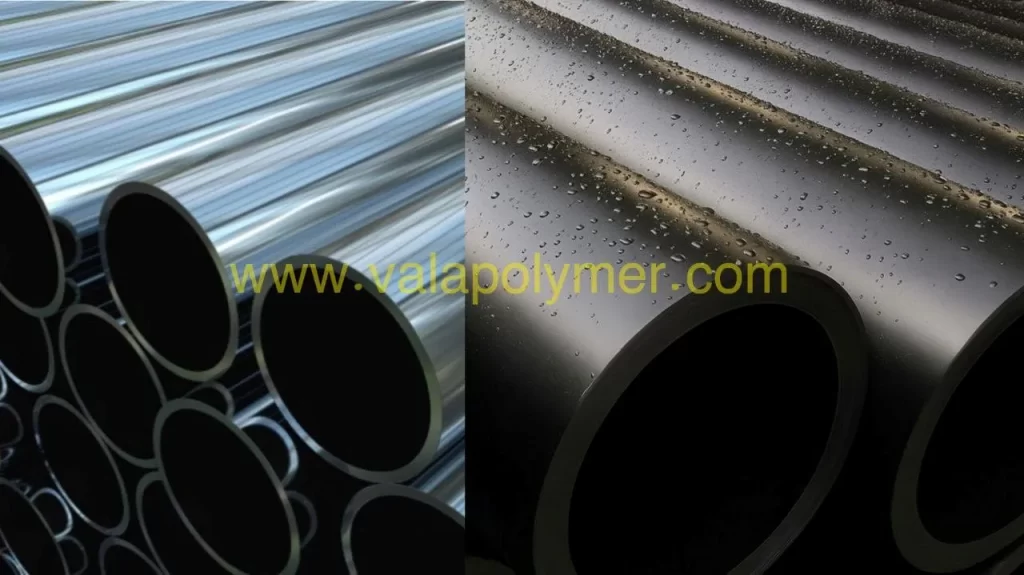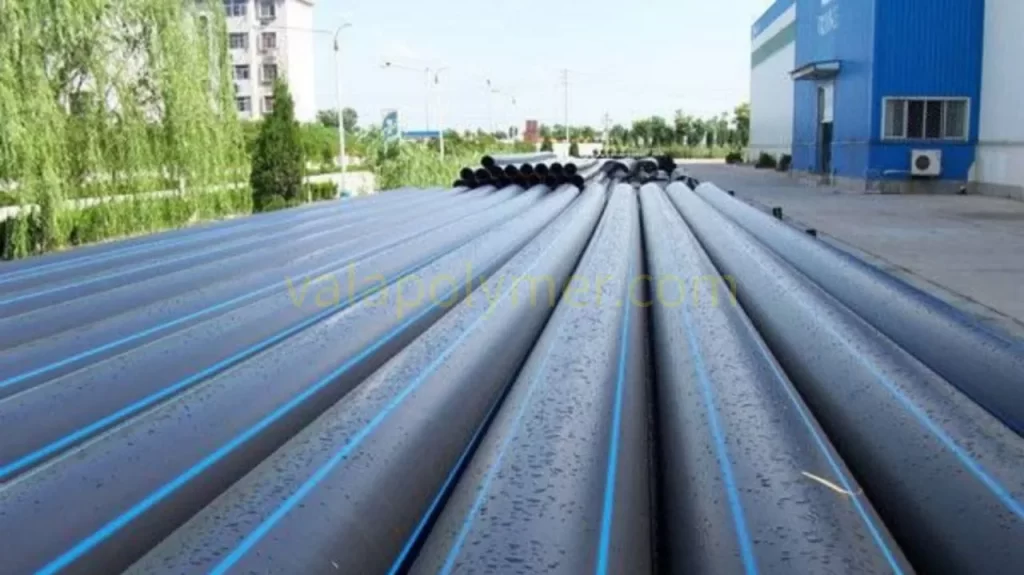


In Iran’s mining industry, the use of polyethylene pipes in mining is considered a reliable alternative to metal and concrete pipes due to their chemical resistance, lifespan of more than 50 years, and easy installation. These pipes are widely used in large projects such as Sarcheshmeh copper, Golgohar iron ore, and Tabas coal mines, and provide stable performance in corrosive mining environments.
In addition, these pipes are used to transport groundwater and even gas and compressed air. In the meantime, polyethylene (HDPE) pipes have become a suitable alternative to metal and concrete pipes due to their high mechanical and chemical resistance and long lifespan.
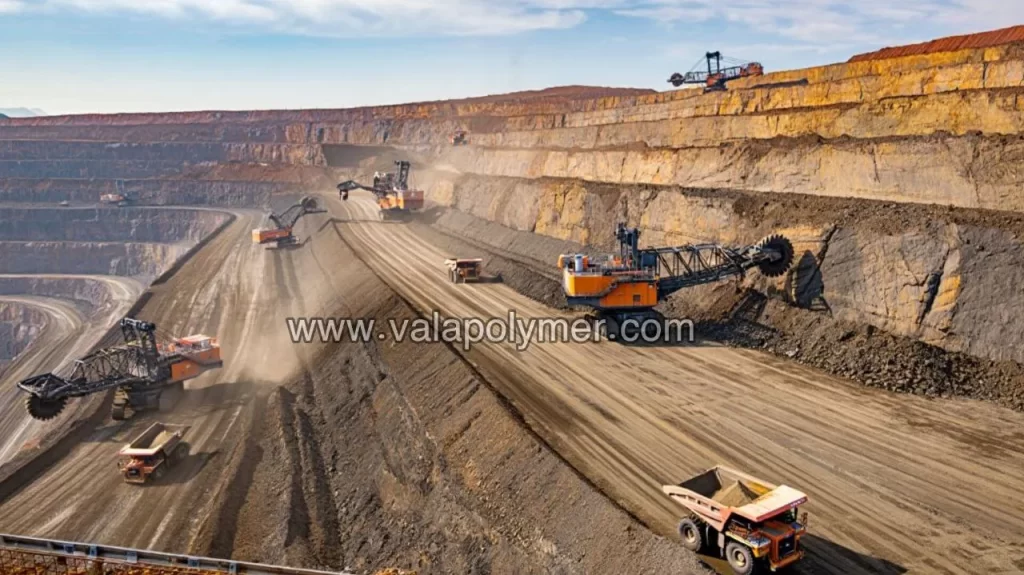
Advantages of polyethylene pipe in mining
- High chemical resistance
These pipes have high resistance to inorganic chemicals such as sulfuric acid, sodium hydroxide, chlorides and salts. Therefore, they provide stable performance in corrosive mineral environments.
2Mechanical strength and durability2
Polyethylene pipes are produced with different SDR classes and nominal pressure (PN 6 to PN 25) and are resistant to pressure and impact. Therefore, if installed in a standard manner, their useful life will be more than 50 years.
Light weight and easy installation
Due to its low weight (about 1/8 the weight of steel pipe), polyethylene pipe is transported and installed in mining projects at a lower cost and faster. This feature also makes the work of contractors easier.
Corrosion resistance
Unlike metal pipes, which rust in humid and acidic environments, polyethylene pipes are corrosion-resistant and minimize maintenance costs.
High flexibility and safety
The flexibility of HDPE pipes prevents cracks or fractures from occurring in conditions such as ground subsidence or vibration caused by explosions in mines. For this reason, the safety of mining projects is increased.
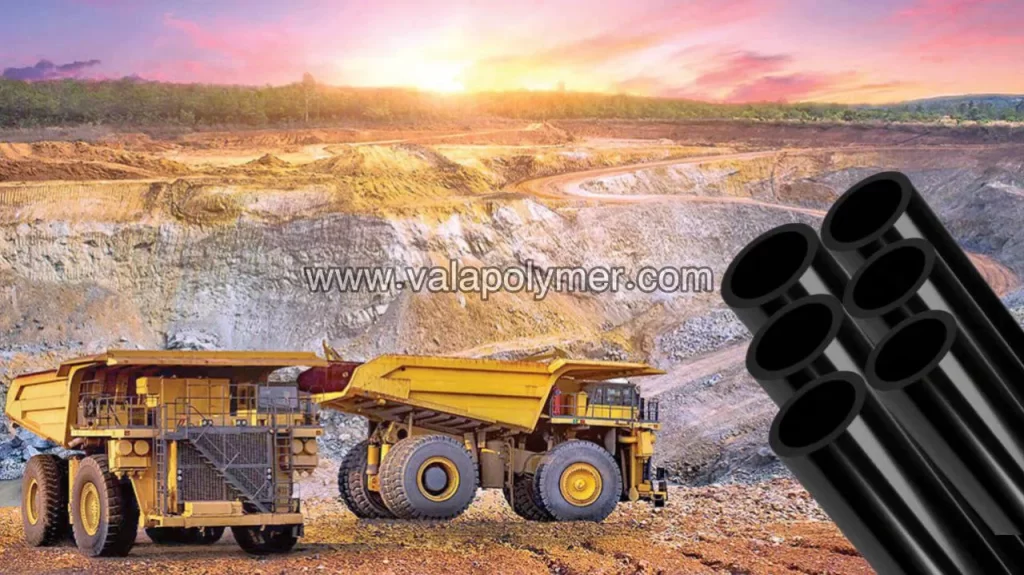
Disadvantages and challenges of polyethylene pipes in mining
- Limitation at temperatures above 80°C
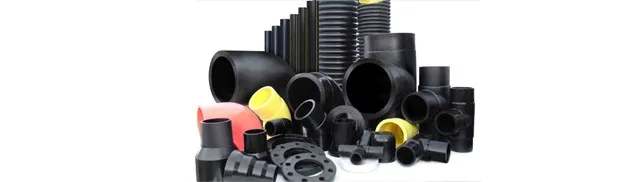
- Need for specialized connections (butt fusion or electrofusion)
- Sensitivity to sunlight in the absence of UV stabilizers
- Limitation on very large diameters (over 1600 mm)
Despite these challenges, the benefits of polyethylene pipe have made it the first choice for many projects.
Standards related to polyethylene pipes in Iranian mines
- National Iranian Standard ISIRI 14427 (equivalent to ISO 4427) – Polyethylene pipes for water and wastewater transportation
- DIN 8074 and 8075 standards – dimensions and technical specifications of polyethylene pipes
- German DVGW standard – for the transport of industrial gases and fluids
Therefore, compliance with these standards ensures that the pipes perform properly in harsh mining conditions.
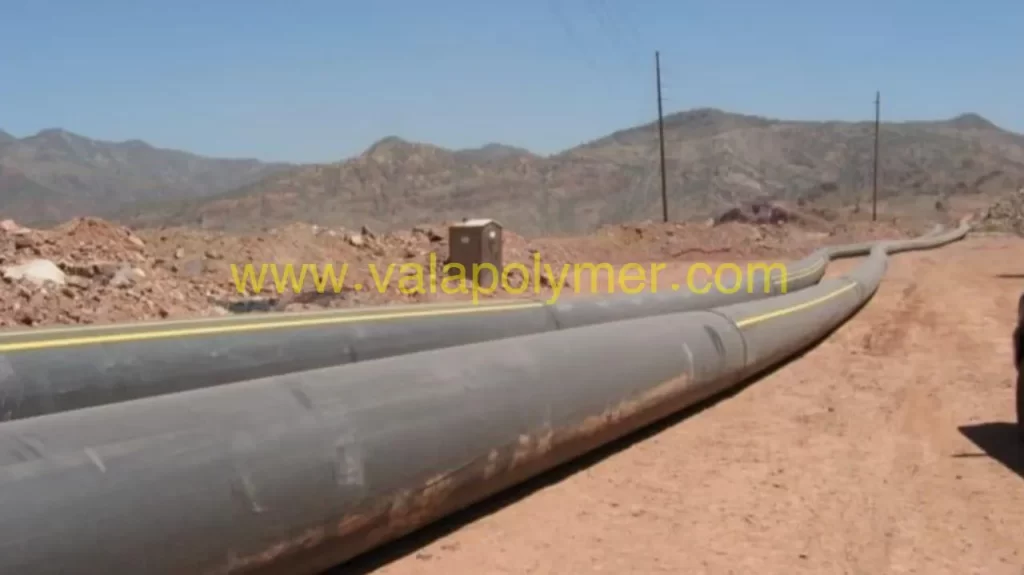
Applications of polyethylene pipes in mining
- Slurry transportation for transporting iron ore, copper and coal to processing plants
- Drainage systems and surface water management in open pit mines
- Transferring industrial wastewater to tailings ponds
- Geomembrane lining in mining tailings dams
- Compressed air and gas transmission in underground mines
Also, these pipes can be used in various mining projects with different environmental conditions.
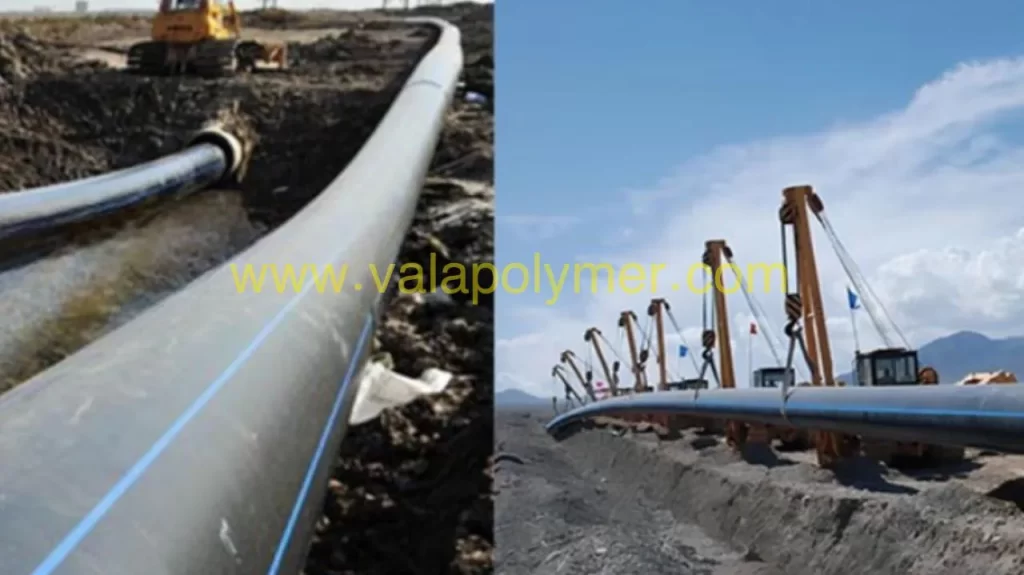
The role of the Valapolymer brand in Iran’s mining industry
Valapolymer Company, as one of the reputable manufacturers of polyethylene pipes in Iran, offers its products with the following features:
- Production in accordance with national and ISO standards
- High resistance to chemicals and UV rays
- قابلیت جوشپذیری عالی (BUTT Fusion و Electrofusion)
- Lifespan of more than 50 years in mining conditions
- Variety in diameters (20 to 1600 mm) and nominal pressures
Therefore, high-polymer pipes are the first choice of many mining contractors.
Pipe comparison table in the mining industry
| Features | Polyethylene pipe (HDPE) | Steel pipe | PVC pipe |
| Chemical resistance | Very high | Weak (edible) | Medium |
| Mechanical resistance | High (up to PN 25) | Very high | Medium |
| Lifespan | More than 50 years | 20 to 30 years | 20 to 30 years |
| Weight and transportation | Lightweight (easy to carry) | Heavy and costly | Style |
| UV resistance | Medium (with additives) | Good | Weak |
| Maintenance cost | Very little | A lot | Medium |
| Mineral application | Excellent | Limited (dry environment) | Limited (light conditions) |
Frequently Asked Questions (FAQ)
Is polyethylene pipe suitable for transporting acid in mining?
Yes, HDPE pipes have high resistance to mineral acids and bases.
What is the lifespan of polyethylene pipe in a mine?
Over 50 years under standard installation conditions.
Can polyethylene pipes completely replace metal pipes?
In most projects, yes, but at very high temperatures and pressures, steel is preferred.
What is the advantage of Valapolymer over other brands?
Using high-quality raw materials, UV resistance, standard production and long life.
Conclusion
Using polyethylene pipes in mining is a smart choice for transporting slurry, wastewater and water in harsh mining conditions. Due to their chemical resistance, long life, flexibility and low maintenance cost, these pipes are a good alternative to metal and PVC pipes. Brands such as Valapolymer, by producing standard and resistant pipes, meet the needs of the Iranian mining industry well. Therefore, choosing the right polyethylene pipe not only reduces costs, but also ensures the safety and sustainability of mining projects.